
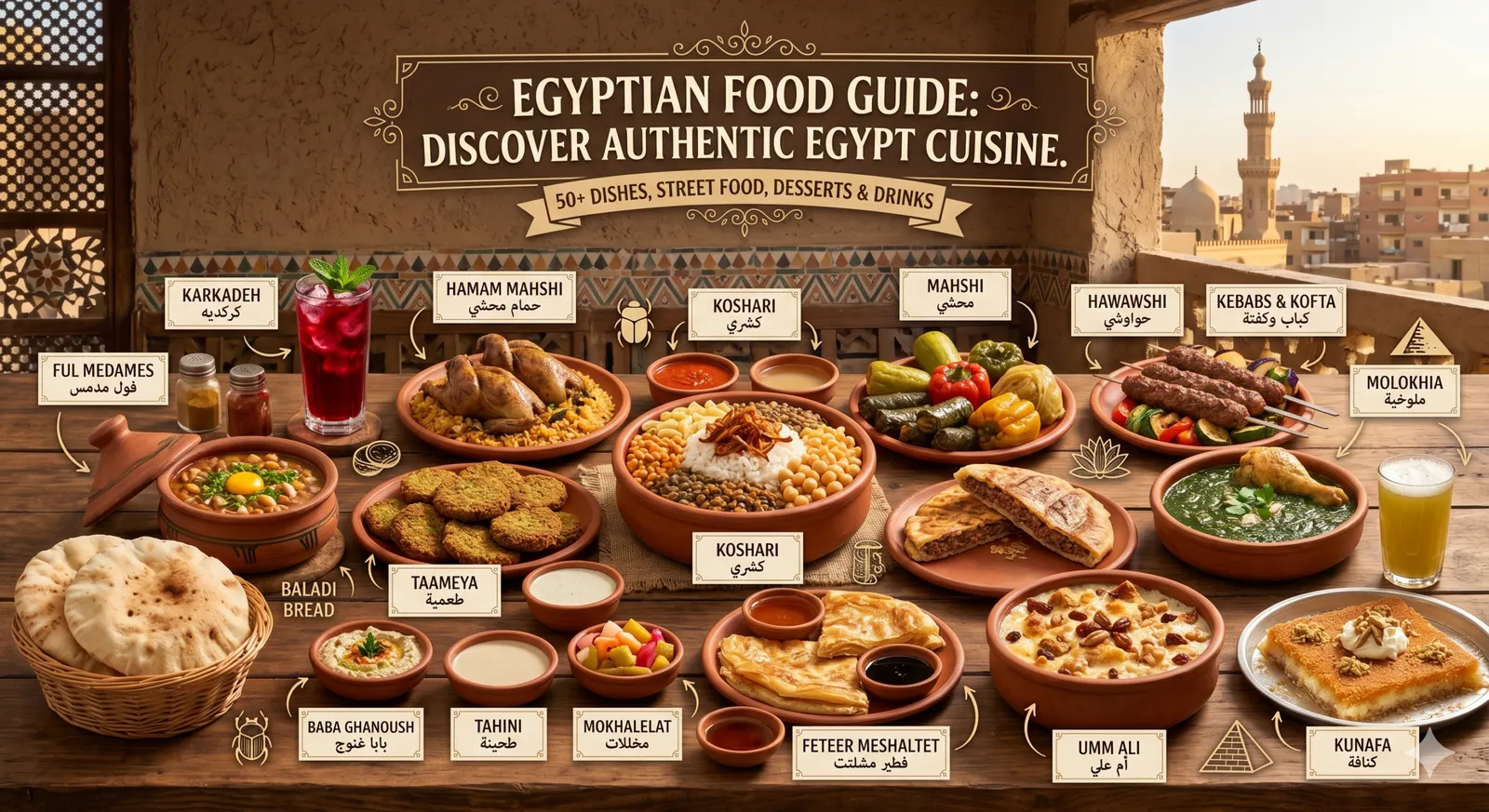
Embarking on a journey through Egypt is not only a visual and historical adventure, but also a tantalizing culinary experience. This complete Egyptian food guide introduces you to the most authentic flavors of Egypt, guiding you through traditional dishes, must-try street foods, and the best ways to enjoy local cuisine. Whether you’re a seasoned foodie or a curious traveler, discovering Egyptian food will color your journey with memories you’ll savor for a lifetime.
Why Use an Egyptian Food Guide for Your Trip?
Egyptian food is a unique blend of simple ingredients, rich spices, and ancient traditions. From iconic street snacks to slow-cooked home recipes, every meal tells a story. Using an Egyptian food guide helps you navigate menus, understand local favorites, and ensure you don’t miss out on culinary treasures hidden in every corner of Egypt.
Must-Try Egyptian Dishes
Exploring Egyptian cuisine means diving into a world of vibrant flavors. Here are some essential dishes you should savor during your Egyptian adventure:
- Koshari: Egypt’s beloved street food, koshari is a mouth-watering mix of pasta, lentils, rice, chickpeas, and a spicy tomato sauce topped with crispy fried onions. Affordable and filling, you’ll find it everywhere from bustling Cairo alleys to family kitchens.
- Ful Medames: Often eaten for breakfast, this classic dish features slow-cooked fava beans seasoned with lemon, garlic, and oil. Garnish with eggs or pickles for an authentic touch.
- Ta’ameya (Egyptian Falafel): Unlike the typical chickpea-based falafel, Egyptian ta’ameya uses broad beans, making it extra green and crispy. It’s usually served in flatbread with fresh veggies.
- Molokhia: A traditional green stew made from jute leaves, molokhia is cooked with garlic, coriander, and either chicken, rabbit, or beef. Its unique texture may surprise new visitors but quickly becomes addictive.
- Mahshi: Stuffed vegetables like zucchini, peppers, and grape leaves, filled with herbed rice and sometimes minced meat, then simmered in tomato sauce.
- Fatta: A festive layered dish of rice, crispy bread, and garlic vinegar sauce, topped with tender lamb or beef pieces—often served during celebrations.
- Hamam Mahshi: Roasted pigeon stuffed with seasoned rice or wheat, a delicacy reserved for special occasions.
- Seafood Delights: Along Egypt’s Mediterranean and Red Sea coasts, fresh fish, calamari, and shrimp are expertly grilled or fried, then served with tahini and bread.
Popular Egyptian Street Food
For the adventurous traveler, Egyptian street food is a thrilling journey in itself. Local street vendors offer an array of mouthwatering bites. Don’t miss these quick treats during your walks:
- Shawarma: Thinly sliced grilled meat, wrapped in soft flatbread and topped with creamy tahini sauce, tomatoes, and onions.
- Sambousek: Small savory pastries filled with spiced meat, cheese, or vegetables—perfect for snacking as you explore.
- Roz Bel Laban: Creamy rice pudding enhanced with cinnamon or nuts, a sweet way to end your meal.
- Aish Baladi: The staple Egyptian flatbread, made with whole wheat flour and baked in blazing-hot ovens, is served with every meal and used to scoop up dips and main dishes.
Essential Drinks & Desserts to Try
Complement your meal with unique Egyptian beverages and finish with decadent desserts. Here are local favorites:
- Karkadeh: Refreshing hibiscus flower tea, served chilled in summer and hot in winter, known for its vibrant color and tart flavor.
- Sahlab: Warm, creamy drink made from orchid root, milk, sugar, and topped with cinnamon and nuts, perfect for cool evenings.
- Om Ali: A luxurious bread pudding soaked in milk and studded with nuts, raisins, and coconut.
- Basbousa: Semolina cake soaked in sweet syrup, often flavored with coconut or almonds—a delightful companion to Egyptian coffee.
How to Eat Like a Local in Egypt
Dining Etiquette and Tips
Egyptian hospitality is legendary. Sharing food is a hallmark of every meal, and guests are always treated like family. Here are some tips to help you dine like a local:
- Always wash your hands before and after meals.
- Bread (Aish Baladi) is your main utensil—use it to scoop up dips and dishes.
- Accepting second helpings is a compliment to your host.
- Avoid using your left hand to eat, as it’s considered impolite.
- In traditional homes, meals may be served on a communal tray on the floor. Enjoy the experience!
Best Places to Eat Traditional Egyptian Food
From vibrant Cairo to the quiet streets of Aswan, you’ll find unforgettable meals at these spots:
- Koshari Abou Tarek (Cairo): Famous for the best koshari in Egypt.
- EL Abd Bakery (Cairo): Known for exceptional desserts and pastries.
- Seafood restaurants in Alexandria: Sample the freshest catch expertly prepared.
- Local souks and food markets: Experience authentic flavors and shop for spices or snacks as souvenirs.
Egyptian Food Guide: Vegetarian & Vegan Options
Egypt is a paradise for vegetarians and vegans, with many plant-based staples. Many dishes such as koshari, ful medames, and ta’ameya offer filling and flavorsome choices. Soups, salads, and stuffed vegetables are standard in restaurants and street stalls, making it easy to maintain your dietary preferences.
Tips for Enjoying Safe & Delicious Food in Egypt
- Choose bustling, busy restaurants—they often serve the freshest food.
- Stay hydrated, but always drink bottled water.
- Peel fruits yourself and wash all produce.
- When in doubt, ask locals for recommendations—they know where to find the tastiest traditional Egypt food.
FAQ: Egyptian Food Guide for Foreign Tourists
What are the most famous Egyptian dishes I should try?
Some of the most beloved Egyptian dishes include koshari, ful medames, ta’ameya, molokhia, mahshi, and fatta. Don’t forget to try fresh seafood along the coasts and sample traditional desserts like basbousa and om ali!
Is Egyptian food spicy?
Generally, Egyptian cuisine favors aromatic spices over fiery heat. Most dishes are mild, but chili sauce or condiments are available if you crave more spice.
What is a typical Egyptian breakfast?
Typical breakfasts consist of ful medames, ta’ameya, aish baladi bread, fresh cheese, and sometimes eggs or salad. Street vendors offer quick and hearty meals every morning.
Are there options for vegetarians and vegans?
Absolutely! Mainstays like koshari, ful medames, and a variety of salads are all vegan-friendly. Egyptian cuisine relies heavily on legumes, vegetables, and grains.
How much should I expect to pay for street food?
Street food in Egypt is very affordable. A hearty serving of koshari or ful usually costs just a few dollars, making it easy to sample a wide variety of traditional Egypt food without breaking the bank.
Your Unforgettable Egyptian Food Adventure Awaits
With this Egyptian food guide, you’re ready to embark on a flavorsome journey through Egypt’s rich culinary landscape. Whether you’re indulging in koshari under Cairo’s city lights or sharing mahshi with friends along the Nile, traditional Egypt food promises delicious memories. So come hungry, savor every bite, and let Egypt’s authentic cuisine become an unforgettable highlight of your travels.